

Beyond Breathing: How NPs Are Advancing Lung and Sleep Health
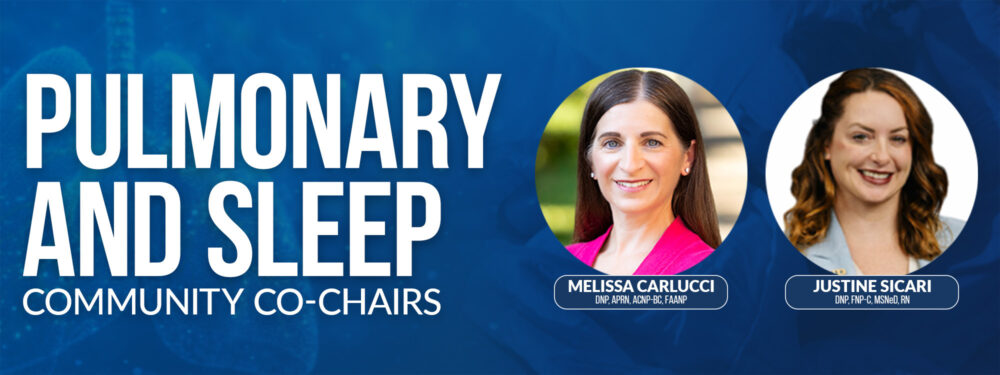
Discover how two nurse practitioner leaders are connecting prevention, innovative treatments and whole-person care to help patients breathe and sleep better.
Breathing and sleeping are fundamental to good health, yet the relationship between pulmonary health, sleep quality and overall well-being is often overlooked. For millions of Americans living with respiratory conditions or sleep disorders, effective care involves more than managing symptoms — it requires prevention, patient education and treatment approaches tailored to individual needs.
In recognition of Healthy Lung Month, two nurse practitioners (NPs) who co-chair the American Association of Nurse Practitioners® (AANP) Pulmonary and Sleep Community share how they are helping patients breathe easier, sleep better and improve their overall health. From practical conversations about smoking cessation and healthy habits to emerging therapies for chronic pulmonary conditions and obstructive sleep apnea, these NP leaders offer insights into the evolving landscape of patient-centered care.
Healthy Lungs Start With Everyday Conversations
Supporting lung health begins with understanding each patient’s needs, challenges and opportunities for prevention. For Justine Sicari, DNP, FNP-C, MSNEd, RN, co-chair of AANP’s Pulmonary and Sleep Community, patient education is central to helping individuals manage chronic respiratory conditions and preserve lung function. “I love to educate patients,” she says. “I think it’s extremely important for patients to have a clear understanding of their disease process. I’m talking about ways to preserve their lung function, and ways to keep them out of the hospital. And a lot of my patients continue to smoke, and some vape, too. I do a lot of smoking cessation education and vaping education.”
Sicari recognizes that conversations about tobacco use and other health behaviors require more than clinical expertise. Drawing on 20 years of nursing experience, she emphasizes the importance of listening without judgement, building trust and meeting patients where they are. “I grew up in a home with smokers. I understand the challenges that some of the patients face. And a lot of times, I’m just there to listen to them. I think my patients, if anything, feel like they can talk to me. They can trust me.”
That same commitment to individualized, whole-person care extends to sleep health. Fellow community co-chair Melissa Carlucci, DNP, APRN, ACNP-BC, FAANP, highlights how managing obstructive sleep apnea (OSA) involves both treatment and sustainable lifestyle changes. “The big picture with OSA is, of course, treating it, but it’s also about making good lifestyle choices and having good sleep habits,” she explains.
Carlucci encourages patients to maintain a healthy weight, follow consistent sleep schedules and develop habits that support restorative sleep. These recommendations extend beyond managing OSA to support broader pulmonary and overall health. “These are things we always talk to patients about — maintaining a healthy weight, having a consistent sleep schedule, avoiding caffeine and alcohol before bed, putting the screens down. All of those good habits contribute to good sleep health, good lung health and ultimately good overall health. It is very much interconnected,” she says.
Beyond One-Size-Fits-All: Advances in Pulmonary and Sleep Care
Advances in pulmonary and sleep medicine are creating new opportunities for NPs to tailor treatment to patients’ individual needs. From emerging pharmacologic options for OSA to targeted therapies for chronic respiratory conditions, these developments are expanding the possibilities for more personalized care.
For Carlucci, one notable advancement is the use of GLP-1-based medications in managing OSA among patients with obesity. “Those medications have really changed the landscape of OSA by putting greater emphasis on reducing obesity, which we know is related to sleep apnea,” she says.
Carlucci emphasizes that these medications expand treatment options rather than replace established therapies such as continuous positive airway pressure (CPAP). “CPAP [is] absolutely [still needed],” she explains. “GLP-1s just offer another option for managing OSA in patients who are obese.”
Similar advances are reshaping chronic obstructive pulmonary disease (COPD) and asthma management. Sicari points to a growing emphasis on identifying patients at greater risk for exacerbations and tailoring treatment to their specific clinical characteristics: “We have turned our focus on patients who are having exacerbations, so we are identifying high-risk patients in COPD. We are adding on additional biologic therapies that target specific phenotypes of that patient.”
Rather than relying primarily on traditional disease classifications, NPs now have more opportunities to consider individual risk factors, inflammatory processes and treatable traits when evaluating treatment options. “Nowadays, our approach is much more specific to the patient, so we’re really able to focus on that patient and what treatable traits that they have, because not every patient looks alike,” says Sicari.
Sicari notes that targeted biologic therapies are also expanding options for patients with severe asthma, reflecting an evolution toward more individualized approaches to managing chronic respiratory diseases. Together, these advances underscore the importance of NPs staying informed about evolving evidence and treatment options while continuing to tailor care to each patient’s needs and circumstances.
Connect With NPs Who Share Your Passion for Pulmonary and Sleep Health
As advances in pulmonary and sleep medicine continue to expand treatment possibilities, connecting with colleagues who share similar clinical interests can provide valuable opportunities for learning, collaboration and professional growth. AANP's Pulmonary and Sleep Community brings together NPs from across the country to exchange clinical insights, discuss emerging developments and share resources that support patient care.
“It’s nice to have a community where we can share ideas that are really moving the needle in patient care,” says Sicari. “The AANP Pulmonary and Sleep Community is a space where we can share ideas and we can share resources.” Carlucci says that she loves that members “can connect with people from across the country who you might otherwise not have the opportunity to meet. It really brings people together. It’s a network where you can discuss things, you can share things, you can just support each other. It’s really what we want the community to be.”
Interested in pulmonary or sleep health? Connect with fellow NPs who share your interests and join AANP’s Pulmonary and Sleep Community. Explore additional pulmonary and sleep resources available through AANP to support your clinical practice and ongoing professional development.